


What is a Migraine?
Around 90 percent of headaches are either tension headaches, migraines (with aura or without), or a combination of the two. A tension headache is more of a dull ache and less debilitating than a migraine. Many people can still function with a tension headache; however, a migraine headache is more debilitating because there is usually a sensory component that goes along with it. Most people can’t function with a migraine, and just want to stay home in bed, because there can be dizziness, and even nausea involved. Migraines affect 16.2–22.7% of the US population, women being more affected than men. Some symptoms of migraines include subacute throbbing pain on one side or bilateral, nausea, vomiting and a sensitivity to light and sound. The most common migraine (80%) includes either frontal, unilateral, or bilateral pain, an unusual aura, lasts for 1-3 days, and can be pretty miserable. 10% of migraines are classic, in which there is unilateral pain, and 30 minutes prior to the headache there is aura, it lasts 2-6 hours and there can be vomiting and pale complexion. The other 10% of migraines are complicated in which the pain is unpredictable or absent, there can be neurological aura, vertigo, loss of consciousness, double vision, muscle weakness and partial paralyses, and duration is also unpredictable.
Some Main Triggers of Migraines
Medication side effects or interactions of different medications taken together Hormonal imbalances3
Food allergies/intolerances3
Waiting too long to eat (hypoglycemia) Amine rich foods3
Artificial sweeteners3
Not getting enough sleep Stress3
Menses Infection Bright light3
Changes in weather3
Mold and other environmental toxins
Common ailments that coincide with headaches are: IBS, fibromyalgia, chronic fatigue syndrome, interstitial cystitis, arthritis, endometriosis, and uterine fibroids.
Three main supplements are usually recommended for migraines:
Riboflavin, Magnesium, and CoQ10. Some other supplements are: 5-HTP, EFAs, Alpha Lipoic Acid, Melatonin, Niacin, Folic Acid, L-Tryptophan, Vitamin D and Calcium. Having low melatonin can be one cause of a migraine.
Some other lifestyle activates that can help improve migraines are exercise, stress relief techniques, biofeedback, acupuncture, chiropractic, and magnesium IVs or a Myer’s cocktail IV. Sleep, hydration and eating at least 3 meals a day also helps!
Some red flags that could be life threatening to look out for: “…early morning headaches that awaken the patient; visual dimming or double vision; headaches that are increasing in frequency or severity over weeks or months; headaches made significantly worse by postural changes; explosive onset of new, severe head pain; and headaches associated with mental status changes, focal motor or sensory deficits, syncope, seizures, fever, or stiff neck.”
“Headache Elimination Diet4”
Foods to avoid:
Certain chemicals in food can be a trigger to a migraine such as MSG, sulfites, tyramine, aspartame and other chemicales. Also, foods high in histamine may want to be avoided. Below is a list of common trigger foods:
Common Trigger Foods
Coffee, caffeinated tea, soda, alcohol (especially red wine), foods with MSG, processed foods and meat, aged cheese, sour cream, yogurt, buttermilk, nuts and nut butters (including peanuts), citrus fruit, onions, sauerkraut, condiments high in vinegar like ketchup, mustard and mayonnaise, leftovers, broad Italian beans, navy beans, fava beans, lentils, stale bread, aspartame, saccharine (Sweet and Low) and processed soy. Also, foods that are high in sodium, white sugar and white flour may want to be avoided. It is recommended to eliminate these foods for at least 3 months. Then you can reintroduce one food at a time to see if the headaches return.
Foods you can eat:
Herbal tea, beans except for the ones listed above, tofu, fresh whole grains, seeds (pumpkin, hemp, sesame, chia), all fruit except for citrus, and veggies . A study done with 83,214 university students found that, “fruit and vegetable consumption was related to lower odds of primary headaches in normal-weight students”. Cottage cheese and ricotta, and good quality goat milk cheese are preferred forms of dairy. Leaks, scallions, garlic and spring onions are preferred over onions. Fresh lean meat and fish over processed meats. Coconut sugar and sea salt over sugar and high sodium foods. You can cook with anti-inflammatory herbs such as turmeric, ginger, garlic, cinnamon, clove, etc. Also, tying in the anti-inflammatory diet, increasing your omega 3 to omega 6 ratio can be beneficial.
There may also be a link between headaches and gastrointestinal disorders. In this case, focusing on plant-based foods is ideal for the gut, many of which are listed above! Lactobacilli and bifidobacterial probiotics have been proven to help, “increase the integrity of the gut epithelial barreier”. Supplementing with a probiotic may be beneficial as well.
Some difficulties with the elimination diet are that it can be difficult to eliminate so many foods for such a long time. It is also hard to eat out when you don’t know all the ingredients that are involved in preparing a dish. Many restaurants and packaged salty foods may contain MSG and other chemicals. You can feel really limited, especially when socializing. In this case try to bring snacks with you, and maybe help choose the restaurant. Also, not all triggers are the same for every migraine case, which means you may not need to eliminate all the trigger foods. Try to keep a food diary to see if you can pinpoint some major triggers. Sometimes the foods we crave the most, can be the main trigger. If you are really not sure, then it is best to eliminate some of the common triggers. Also, remember to not skip meals and also check your medications for possible headache side effects. Sometimes taking a combination of different medications could also cause a headache.
Medication Interference
Some common medications taken for migraines are Excedrin, Advil, Aspirin and Tylenol. Both Advil and Aspirin have major interactions with activated charcoal, danshen, Siberian cocklebur and willow bark. Willow bark is the natural herb form of salicylic acid which is found in aspirin. However, if you are taking aspirin do not take willow bark. Excedrin is a combination of acetaminophen, aspirin and caffeine. It has major interactions with about 14 different herbs/supplements/foods such as activated charcoal, beer, grapefruit, danshen, Siberian cocklebur, St. John’s Wort, willow bark and wine. Advil may have a depletion in folic acid, and Aspirin has a moderate depletion in vitamin B12. Excedrin has a moderate depletion in potassium and B12. Overall, taking NSAIDS long-term can increase gut permeability which can
increase histamine and trigger a headache. There are also a number of other medications used to prevent migraines in early treatment, and for other symptoms of migraines such as nausea and dizziness. Please make sure to check with a health care practitioner before adding any new supplements/herbs and foods to your diet to make sure nothing has an interaction with your medication. You may also need to supplement with a vitamin or mineral if your medication is causing a depletion.
Two Beneficial Foods
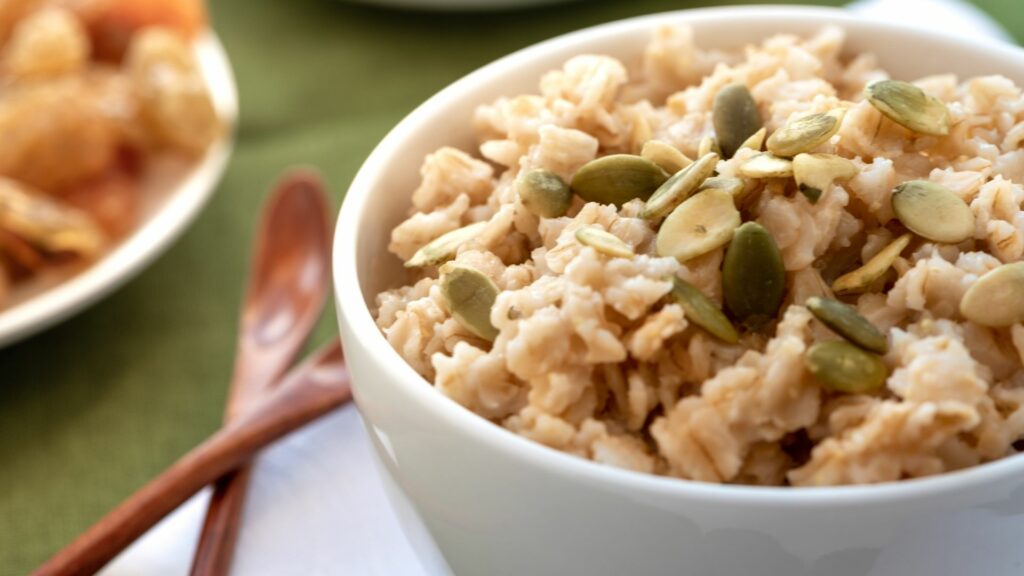
Pumpkin Seeds:
¼ cup of Pumpkin seeds has 37% of your daily value for magnesium. Those with migraines have been found to have low levels of “ionized tissue magnesium”.
You can easily add pumpkin seeds to a salad, sauteed kale, Buddha bowl (roasted veggies, brown rice and tofu), or have them as a snack. Green leafy vegetables are a good source of minerals, so I like to add pumpkin seeds to some steamed or lightly sautéed greens!
Organic Oatmeal:
Those that have migraines, “have been shown to have reduced phosphorylation potential in the brain and muscles, suggesting a mitochondrial defect in electron transport. Riboflavon is the precursor for two coenzymes involved in electron transfer for redox reactions”. There have been clinical studies that show a riboflavin supplement significantly helps to prevent migrains.
In 1 cup of cooked oatmeal, there is 85% of the RDA value for riboflavin.
Supplements
Magnesium:
A study showed that 600mg of magnesium dicitrate significantly reduced the frequency of a migraine compared to the placebo group. Magnesium has also been shown to have relief with those with menstrual migrains1. Pure encapsulations has a magnesium citrate. One capsule is 150mg. You can take 4, 1x a day. Some people can get loose bowels from taking the citrate form of magnesium. Another option is to do a magnesium IV (2g in 100 ml of saline). There are many IV health spas popping up that offer magnesium IVs.
Coenzyme Q10:
A double-blinded, placebo- controlled, randomized trial with 42 patients with migraines, found that a daily dose of 150 mg of Coenzyme Q10 over the course of three months reduced headache frequency. 100mg 3X a day reduced “attack frequency” by 47.6% over three months. Pure
encapsulations has a CoQ10 that is 120mg per cap. You can take anywhere up to 300mg/day, so two caps per day (240mg) would be a good dose.
Referral
There are many health spas opening up that offer vitamin and mineral IVs. A standard “Myer’s cocktail” IV contains vitamin C, B-complex with B12, magnesium, zinc and glutathione. A modified Myer’s Cocktail that contains magnesium, calcium, B vitamins, and vitamin C, was “found to be effective against acute asthma attacks, migraines, fatigue (including chronic fatigue syndrome), fibromyalgia, acute muscle spasm, upper respiratory tract infections, chronic sinusitis, seasonal allergic rhinitis, cardiovascular disease, and other disorders.” If you have an IV place near you, you can ask for a Myer’s cocktail. In the beginning you may want to go once a week for a few weeks and then taper down to once a month. However, it is best to check with a health care practitioner for specific instructions. A simple Epsom salt bath is also a great way to get magnesium!
Recap
Migraine headaches are more severe and can be more debilitating than a tension headache. There are different types of migraines, but the most common includes frontal, unilateral, or bilateral pain, an unusual aura and lasts for 1-3 days . There are several different triggers for migraines such as medication side effects or combing different medications, hormonal imbalances, food allergies/intolerances, infections, menses, bright light, changes in weather and environmental toxins (mold). Some foods that may be a trigger are those that contain tyramine, sulfites, MSG, aspartame and other chemicals. There is not a one size fits all for each person that experiences migraines, so keeping a food journal is important to know which foods are “your” food triggers. Other triggers for migraines include waiting too long to eat, not getting enough sleep, not staying hydrated, and stress. Also, make sure you get out in the sunlight because Vitamin D was found low in those with migraines. Make sure to get vitamin B and Magnesium rich foods in your diet. You can also supplement with magnesium or get a magnesium IV, or the “Meyer’s Cocktail”. CoQ10 is also a common supplement recommended for migraines.


